
Quantitative Crypto Trading Careers: Low-Latency Execution, Statistical Arbitrage & Market Making in 2026
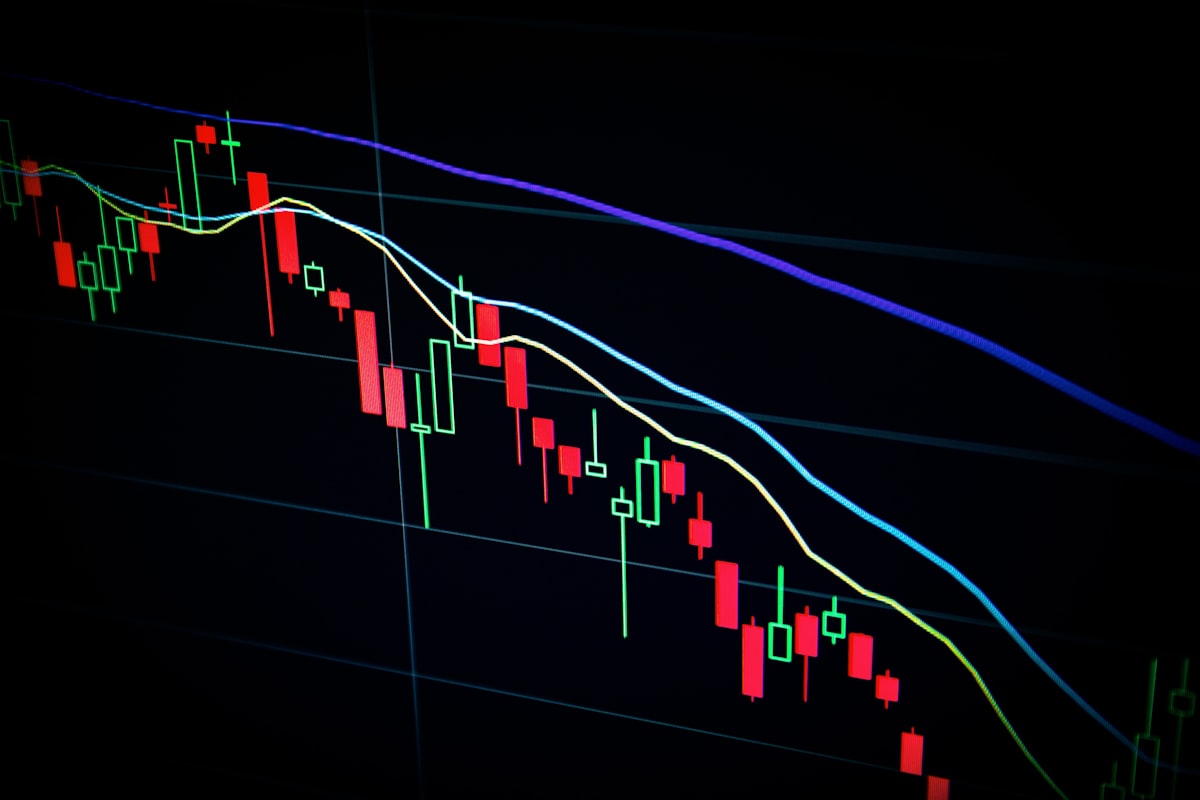
Cryptocurrency markets operate 24 hours a day, 7 days a week, 365 days a year across hundreds of centralized exchanges (Binance, Bybit, Coinbase, OKX) and decentralized liquidity protocols (Uniswap, Raydium, Hyperliquid, dYdX). In 2026, cryptocurrency markets represent the most dynamic, fragmented, and lucrative frontier for quantitative research, statistical arbitrage, automated market making (AMM), and high-frequency trading (HFT). Elite quantitative trading firms—such as Jane Street, Wintermute, Jump Crypto, Citadel Securities, Flow Traders, and GSR—deploy billions of dollars across complex automated trading strategies, generating exceptional returns and paying top quantitative researchers and software engineers millions of dollars in annual performance bonuses.
Unlike traditional equities or commodities trading where markets are centralized and heavily intermediated by clearing houses, crypto trading spans both off-chain WebSocket feeds and on-chain mempool execution. Quantitative traders must navigate cross-venue latency differences, perpetual swap funding rate arbitrage, cross-chain bridge settlement risks, decentralized exchange slippage curves, and maximal extractable value (MEV). If you possess exceptional mathematical ability, deep programming skills in C++ or Python, and are seeking elite crypto finance and trading jobs, breaking into quantitative crypto trading is one of the highest-earning career paths in the world.
Key Takeaways for Quantitative Crypto Traders
- Statistical Arbitrage & Cointegration: Modeling statistical pricing discrepancies between spot, perpetual futures, and calendar options across multiple international exchanges to capture mean-reverting alpha.
- CeFi/DeFi Hybrid Execution: Arbitraging pricing inefficiencies between centralized order books and decentralized automated market makers (AMMs) like Uniswap v3/v4 and Raydium using private RPC endpoints, flash loans, and real-time multi-exchange fee and price comparison trackers like Cryptoradar.
- Funding Rate & Basis Arbitrage: Capitalizing on perpetual swap funding rates by longing spot assets and shorting perpetual contracts (cash-and-carry basis trade) to extract double-digit delta-neutral yields.
- Low-Latency Systems Engineering: Writing ultra-fast C++ and Rust order management systems (OMS) and execution algorithms optimized for sub-millisecond API order submission and WebSocket market data parsing.
- Dynamic Risk Management & Margin Modeling: Constructing real-time risk engines that monitor portfolio Value-at-Risk (VaR), exchange counterparty concentration, and liquidation thresholds across volatile leverage environments.
The 3 Core Roles in Quantitative Trading Firms
Quantitative prop trading shops and digital asset hedge funds organize their teams into three closely integrated specializations:
1. Quantitative Researchers (QRs)
Quantitative researchers are mathematical architects. They analyze gigabytes of historical tick-by-tick order book data, construct predictive machine learning models, test alpha signals, and formulate trading strategies. QRs spend their days in Python, Jupyter notebooks, C++, and time-series databases (kdb+/q, ClickHouse), evaluating Sharpe ratios and maximum drawdown curves.
2. Quantitative Developers (QDs) / Low-Latency Engineers
Quantitative developers build the high-speed execution engines and connectivity infrastructure that bring the researcher's models to life. They write highly optimized C++ and Rust code, optimize Linux kernel network stacks (kernel bypass, DPDK, Solarflare OpenOnload), and minimize serialization overhead when interacting with exchange REST and WebSocket APIs. Check our Rust vs Golang Guide to explore low-latency languages.
3. Quantitative Traders (QTs) / Execution Specialists
Quantitative traders actively monitor live strategy performance, manage real-time risk exposures, adjust execution parameters during extreme volatility events, and optimize exchange fee tier volumes. They possess sharp market intuition and an encyclopedic understanding of exchange liquidation mechanisms and market microstructure.
2026 Compensation Benchmarks for Quantitative Crypto Roles
Compensation in quantitative trading firms is famously performance-driven. Base salaries are high, but annual discretionary bonuses tied to trading PnL (profit and loss) frequently represent 70% to 90% of total compensation:
- Senior Quantitative Trader / Portfolio Manager: $200,000 – $350,000 base + 15% to 30% of strategy net PnL (Total: $500,000 – $3,000,000+).
- Quantitative Researcher (Mid-Senior): $160,000 – $260,000 base + formulaic performance bonus. Explore finance roles.
- Low-Latency C++ / Rust Execution Engineer: $175,000 – $280,000 base + substantial bonus. Browse open Rust engineering jobs.
- Junior Quantitative Analyst: $110,000 – $160,000 base + entry bonus.
For more compensation details, check our comprehensive Web3 Salaries and Compensation Guide.
Step-by-Step Action Plan to Break into Quantitative Trading
- Build a Strong Foundation in Probability & Statistics: Master linear algebra, stochastic calculus, time series econometrics, and hypothesis testing. Books like Advances in Financial Machine Learning by Marcos Lopez de Prado are industry gold standards.
- Master High-Performance Python & C++: Become proficient in NumPy, Pandas, Polars, SciPy, and modern C++ (C++20). Write multi-threaded order book parsers and backtesting engines from scratch.
- Backtest and Paper-Trade a Live Crypto Strategy: Connect to exchange APIs (such as Binance or Bybit testnets) and deploy an automated market making or mean-reversion trading bot. Document your methodology, Sharpe ratio, latency profiles, and risk controls in a public GitHub repo.
- Understand Crypto Market Microstructure: Study how perpetual futures funding rates, liquidation cascades, and AMM constant-product formulas (x * y = k) interact. Review our guide on MEV and Quantitative Arbitrage.
- Prepare for Brainteasers and Mental Math: Practice probability riddles, conditional probability puzzles, and fast mental math calculations commonly tested in prop shop interview screens (Heard on the Street, QuantJob interviews).
- Apply to Elite Trading Firms: Explore verified vacancies across our crypto finance and trading directory or apply for borderless remote crypto jobs.
Frequently Asked Questions
Do I need a PhD in mathematics or physics to become a quant?
While many quantitative researchers hold PhDs in STEM fields, software engineers and quantitative traders with bachelor's or master's degrees in computer science, statistics, or electrical engineering are widely hired if they excel in coding and math assessments.
How does crypto quant trading differ from traditional equity trading?
Crypto markets have higher volatility, fragmented liquidity across global venues, retail-driven order flow, 24/7 trading without market closes, and unique derivative products like perpetual swaps and decentralized liquidity pools.
What is the difference between Market Making and Directional Trading?
Market makers provide continuous liquidity on both sides of the order book (posting bids and asks) to capture the bid-ask spread without taking directional market bets, whereas directional traders take long or short bets based on quantitative predictive signals.
Can quantitative crypto traders work remotely?
Many crypto-native prop shops (like Wintermute and GSR) offer remote-first setups, while traditional market makers (Jane Street, Jump) often prefer hybrid arrangements in financial hubs like New York, Chicago, London, and Singapore.
Ready to deploy automated trading capital? Explore verified openings in our crypto finance directory or browse weekly top picks on our top Web3 jobs board.
Latest Crypto Jobs
 Crypto Jobs Hub$24,000 - $30,000Remotemarketing7mo
- AlchemyBucharestOther13h
- PhantomRemoteData13h
- CoinbaseRemote - USAEngineering13h
 Axiom$130,000 - $160,000Remotebusiness-development1d
Explore Web3 & Crypto Jobs
Looking to start or accelerate your career in Web3? Browse open roles across the industry: